How to Host a Visiting Sports Team Without Turning It Into a Production
Learn how to host a visiting sports team with clear logistics, shared responsibilities and practical ways to make the exchange useful to both sides.
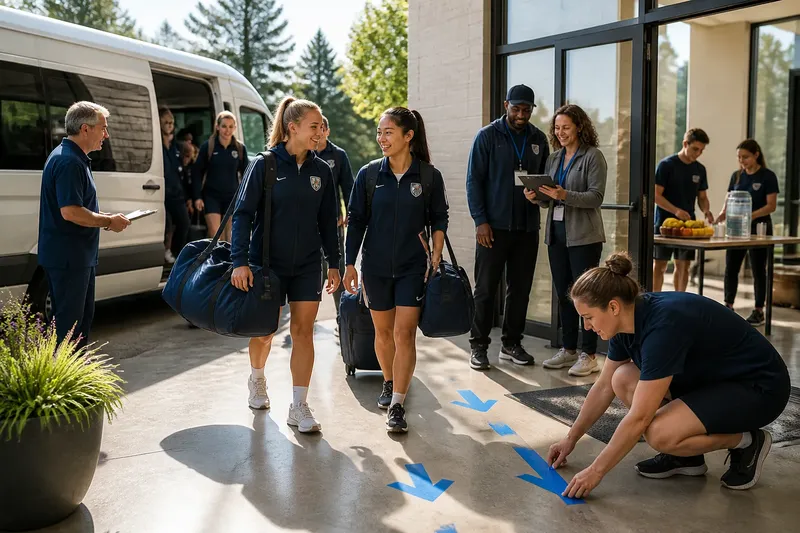
A minibus pulls up beside the gym while a volunteer is still taping arrows to the hallway floor. Hosting a visiting sports team is easier when the first question is not what to present, but where everyone needs to go next.
For an invented example, imagine a youth club expecting an overseas team for a match and an overnight visit. The host coordinator has a gym, a community center, a shared meal and several volunteers. The useful work is logistical: make the visit legible, give both teams room to contribute, and have a plan when the schedule slips.
Assign the Work
Write down who owns each task rather than relying on a general call for help. One person should handle arrival and transport, another the venue, another meals, and another schedule changes. Give visitors one host contact who can reach those people without making the guests search the building.
Check the practical inputs before confirming the plan:
- Observe whether the arrival point is easy to find; if the bus cannot stop there safely, then send a map to a nearby unloading point and assign someone to meet it.
- Observe whether each venue has an accessible entrance and a usable route to the activity space; if not, then change rooms or confirm an appropriate alternative with the venue staff.
- Observe whether the visiting coach has supplied food restrictions and ingredient questions; if details are unclear, then ask the coach what information the meal team needs before choosing dishes.
- Observe whether the schedule names a responsible person for every transition; if a block has no owner, then assign one before sending the schedule.
- Observe whether changing, resting and private-call spaces are available; if a room is unavailable, then offer a clearly identified alternative rather than leaving visitors to improvise.
- Observe whether the host team has a reliable way to communicate a delay; if volunteers lack a shared contact method, then set one up and tell the visiting contact how to use it.
These checks turn hospitality into work people can actually complete. A shared contact sheet is like a labeled tool drawer: less elegant than a speech, and considerably more useful when something needs fixing.
Make the Schedule Usable
Send a plain schedule before the visit. Include meeting points, venue names, activity order, transport arrangements, meal information, equipment requests and the host contact. Mark which activities are fixed and where there is room to rest or change plans.
Do not treat every open space as a problem to fill. Travel, matches and new surroundings can be tiring. A break gives visitors time with their own teammates and gives hosts a chance to deal with ordinary delays without turning the next activity into a sprint.
Say you are hosting a team that arrives at the gym before a scheduled community-center visit, and the match runs late. The coordinator checks the schedule, tells the center contact that arrival will be delayed, and offers the visitors a choice: eat at the gym or keep the original meal plan and shorten the visit. If the team chooses the gym meal, the coordinator updates the volunteers and transport contact; the observable result is a revised plan everyone can follow, rather than guests waiting for instructions in a hallway.
Share the Hosting
A visit should not make the visiting team a permanent audience. Give both clubs practical roles: mixed-team warm-ups, shared equipment setup, a joint skills session, or a meal where players help with an agreed task. Explain the activity and its purpose without requiring anyone to perform a custom or represent a country.
Ask the visiting coach and host players what they would like to exchange. One team may want to compare training drills; another may prefer a relaxed game and time to talk. A short conversation in advance can shape an activity that belongs to both groups rather than displaying one group for the other.
At a community stop, coordinate with local staff about access, timing and what visitors may photograph. The venue should help decide what is appropriate there. Treating a community space as a backdrop for visiting athletes is a reliable way to make the hosts feel like props in their own building.
Handle Changes Clearly
Pick a simple channel for updates, such as a group message for team contacts and a printed schedule at the venue. Keep private information off public lists. If a meal ingredient changes, a room becomes unavailable or transport is delayed, tell the person who needs to act and state the replacement plan.
For language support, use an interpreter for important logistics when one is available. Keep directions short, name places consistently and allow time for questions. Players can help one another with informal conversation, but no athlete should be treated as the default interpreter for medical, personal or sensitive matters.
Which Hosting Details Matter Most?
What should the schedule include?
List meeting points, transitions, contacts, meal arrangements and equipment needs. If an activity depends on a venue or person, name that dependency so the coordinator can make a clear adjustment if it changes.
How can both teams contribute?
Choose an activity with shared roles, such as setting up a mixed-team drill or preparing a meal area. If visitors prefer not to take part in a particular task, offer another role or let them rest without making a public issue of it.
What should happen when plans change?
Tell the host contact and visiting coach what changed, what happens next and where the teams should go. If the replacement affects food, transport or access, contact the volunteer responsible for that part before announcing the update.
How should hosts review the visit?
Ask practical questions about directions, timing, facilities and communication. If guests or volunteers identify a specific obstacle, record the change to make for the next exchange instead of asking anyone to judge the visit as a whole.
Close the Loop
At departure, confirm transport, return borrowed equipment and tell both teams how to contact one another afterward if they want to. A short thank-you can mention a shared activity or contribution without implying that every guest had the same experience.
Before volunteers disperse, note what needs repair in the plan: an unclear entrance, a missed meal update, a room that was hard to find. Hosting a visiting sports team works best when those observations lead to specific changes. Keep the parts that helped people coordinate, and change the parts that made them wait, guess or carry someone else’s job.